|
|||||||||||||
|
|||||||||||||
 |


SYNTHESIS: THE BIMP-EAGA REAL ESTATE PRACTICES
AREA Press Release No. 0846/2025: August 26, 2025
Dr.Sopon Pornchokchai, Ph.D. Dip.FIABCI, MRICS
President, Agency for Real Estate Affairs (AREA)
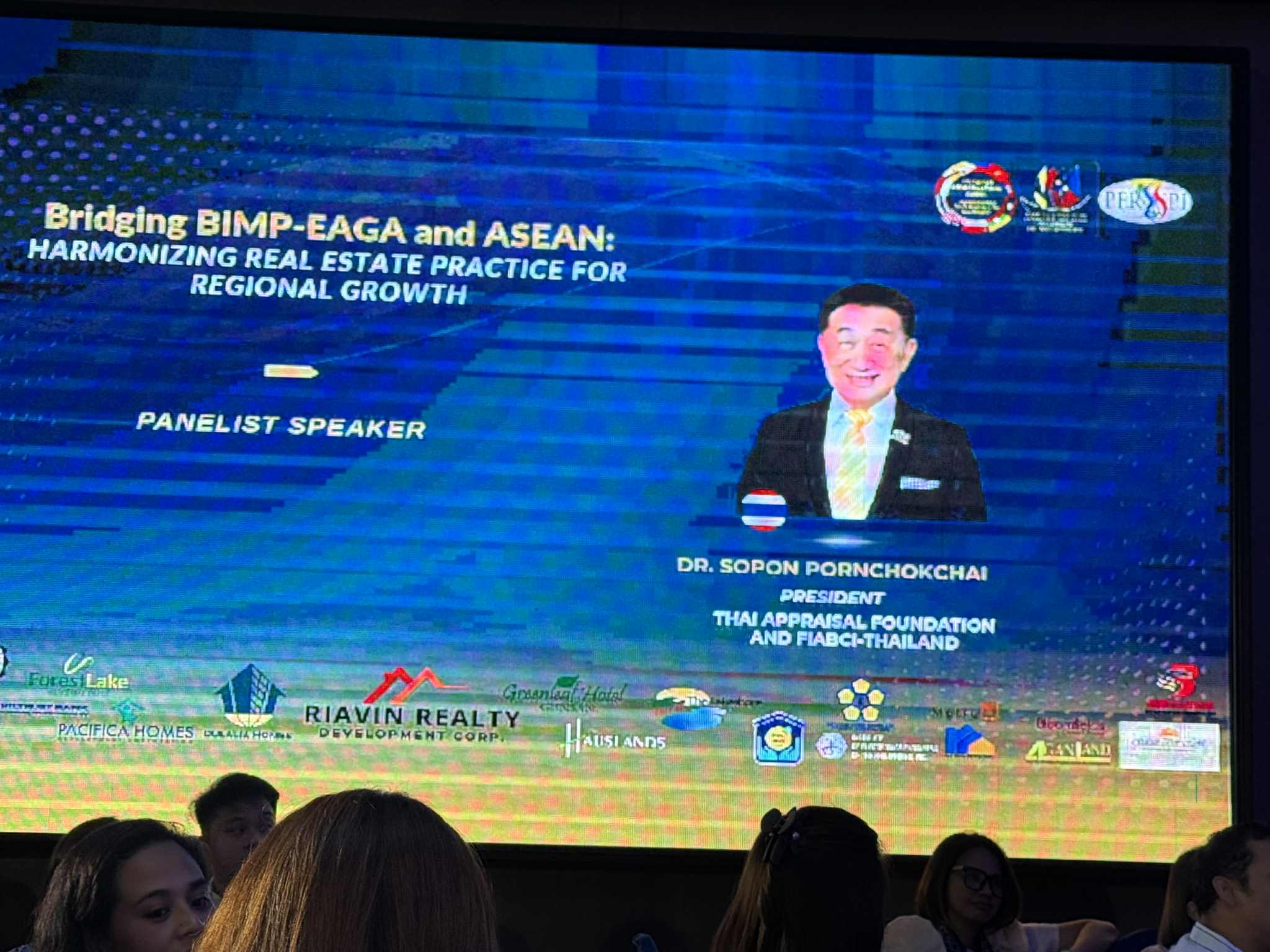
This presentation is a synthesis of the BIMP-EAGA Real Estate Pratices shared by Dr.Sopon Pornchokchai, President, FIABCI-Thai and President, Thai Appraisal & Estate Agents Foundation at the 3rd PFRESPI ASEAN Real Estate Summit on “Navigating Real Estate Practice in the New Heights” held during August 25 to 27, 2025, Greenleaf Hotel, General Santos City by the Philippine Federation of Real Estate Service Professionals, Inc. (PFRESPI).
Challenges in Real Estate Developments
Real estate development in BIMP-EAGA faces significant challenges, including weak intra-regional transportation and connectivity, poor public-private partnerships, complex and inconsistent cross-border regulations, limited financing for SMEs, a reliance on resource-based economies, and the need for better subnational government coordination and capacity building. These issues hinder the development of integrated supply chains, attract investment, and fully leverage opportunities for real estate growth within the diverse subregion. For example.
- Weak Infrastructure and Connectivity: Insufficient transportation networks (both intra-regional and within individual nations) impede the efficient movement of goods and people, which is crucial for developing real estate projects and supply chains.
- Regulatory and Customs Hurdles: Cumbersome and unharmonized cross-border trade and customs procedures create significant "behind-the-border" costs, making it difficult to facilitate investment and integrate supply chains.
- Limited Private Sector Engagement: Weak private sector capacity and a lack of effective public-private partnerships hinder investment and development initiatives.
- Financing and Investment Flow: Substantial investment is needed for infrastructure, but there are challenges in attracting intra-sub-regional investment and supporting SMEs, which are vital for the region's growth.
- Over-reliance on Primary Resources: Many economies in BIMP-EAGA are dependent on raw material exports, with less focus on value-added processing and manufacturing, limiting opportunities for diversified real estate development linked to industrial growth.
- Fragmented Subnational Governance: While there's strong political commitment, translating this into effective action requires improved coordination and capacity among subnational governments across the participating countries.
- Lack of Information and Coordination: Weak mechanisms for sharing information on investment opportunities and regulatory changes, along with the need for stronger platforms for sharing best practices, slow down collaborative efforts.
However, despite these challenges, BIMP-EAGA offers opportunities, particularly through improved connectivity and the potential to build integrated economic corridors and value chains. Fostering cooperation, improving regulatory environments, and empowering local governments are key to overcoming these obstacles and catalyzing real estate development in the region.
Key Areas for Real Estate Development
The following areas some key areas for real estate development:
- Economic and Industrial Zones: Develop zones for processing and manufacturing, particularly along the West Borneo and East Borneo corridors, to attract foreign direct investment and facilitate trade.
- Tourism-Related Properties: Construct accommodations, restaurants, and ecotourism facilities in areas rich with unique cultural and natural attractions to boost the region's tourism sector, a key pillar of BIMP-EAGA.
- Agro-Industry and Fisheries: Develop properties and facilities for the agro-industrial and fisheries sectors, aligning with the "food basket" initiative and creating opportunities in rural and coastal areas.
- Logistics and Connectivity: Invest in infrastructure development, including new intra-regional shipping routes and air links, to improve connectivity and facilitate the movement of goods and people across the region.
- Support for Economic Corridors: Focus on developing properties and infrastructure within the existing West Borneo Economic Corridor, the Greater Sulu-Sulawesi Seas Economic Corridor, and the emerging East Borneo Economic Corridor to link production with supply chains.
These activities can be interrelated and supportive to one another as well. Development should be in multi-centres in this region.
Strategic Considerations:
There are some strategic consideration in real estate developments in this BIMP-EAGA area such as:
- Investment Incentives: Leverage national and regional incentives, such as tax holidays, exemptions, and special economic zone programs, to attract developers and investors to these priority sectors.
- Sustainable and Inclusive Growth: Ensure that development projects contribute to sustainable economic growth and inclusive development, spreading benefits to marginalized areas and creating jobs.
- Regional Cooperation: Foster cooperation among member countries to pool resources and enhance market access, supporting the development of high-potential economic zones and corridors, according to a BIMP-EAGA study.
- Transition to Spatial Corridors: Support the transition from transport-centric to area-based spatial corridors, as recommended by the Asian Development Bank, to better spread development benefits to wider geographic areas.
On the whole, Real estate development in BIMP-EAGA should focus on economic zones for manufacturing, tourism-related properties like resorts and eco-lodges, agro-industrial facilities, and infrastructure to support the West Borneo and Greater Sulu-Sulawesi economic corridors. Development should be guided by the BIMP-EAGA vision for sustainable and inclusive growth, with support from investment incentives, improved logistics, and the development of spatial corridors to connect marginalized areas to economic opportunities.
Needs for Standard Ethical Practices
Standard ethical practices for real estate professionals, even without a specific BIMP-EAGA-wide code, include honesty, integrity, and loyalty to clients, full disclosure of material facts, fair and reasonable fees, professional competence, and avoidance of discrimination and conflicts of interest. Professionals must act in their client's best interest while maintaining impartiality and upholding legal and moral standards. Some core ethical principles are needed:
- Client-Centric Approach: Real estate professionals must protect and promote the interests of their clients, acting with loyalty, honesty, and good faith.
- Professional Competence: Agents must possess and apply sufficient knowledge, training, and experience to provide responsible advice and service.
- Honesty and Disclosure: Full and truthful disclosure of all material facts, property details, and any potential conflicts of interest to clients is mandatory.
- Fairness and Impartiality: Transactions should be conducted with fairness, justice, and impartiality toward all parties involved, and professionals should not discriminate against clients based on factors like race, gender, or religion.
- Transparency: All dealings and professional fees, including any referral fees or commissions, must be clearly communicated to clients.
- Professional Responsibilities:
- Stay Informed: Professionals must continuously update their knowledge of local laws, market conditions, and industry developments to provide accurate advice.
- Manage Conflicts of Interest: Any potential or actual conflict of interest must be disclosed to the client immediately.
- Adhere to Laws and Regulations: Agents must comply with all applicable laws, licenses, and government regulations.
- Responsible Fee Structure: Fees charged should be fair, reasonable, and in line with industry standards.
- Ethical Conduct in Practice: Client-Agent Agreement: Professionals should carry out client instructions as outlined in the estate agency agreement.
- Integrity in Transactions: Protect clients from fraud, misrepresentation, and unethical practices during real estate transactions.
- Respect for Fellow Professionals: Act with fairness and good faith in dealings with other professionals.
- Resolve Complaints Professionally: Respond appropriately to complaints, aiming to resolve issues fairly and professionally.
When real estate organizations can pooled together on democratic manner with MLS system, indemnity insurance, accrow account and joint-education program such as FIABCI ASEAN Region, sound and reliable real estate practices can be materialized.